
Before You Buy Your First Supplement
The supplement industry generates over $150 billion annually. Walk into any health food store and you’ll face hundreds of products making impressive claims. It’s overwhelming — and for most people, it results in buying things they don’t need, at doses that don’t work, without understanding the basics.
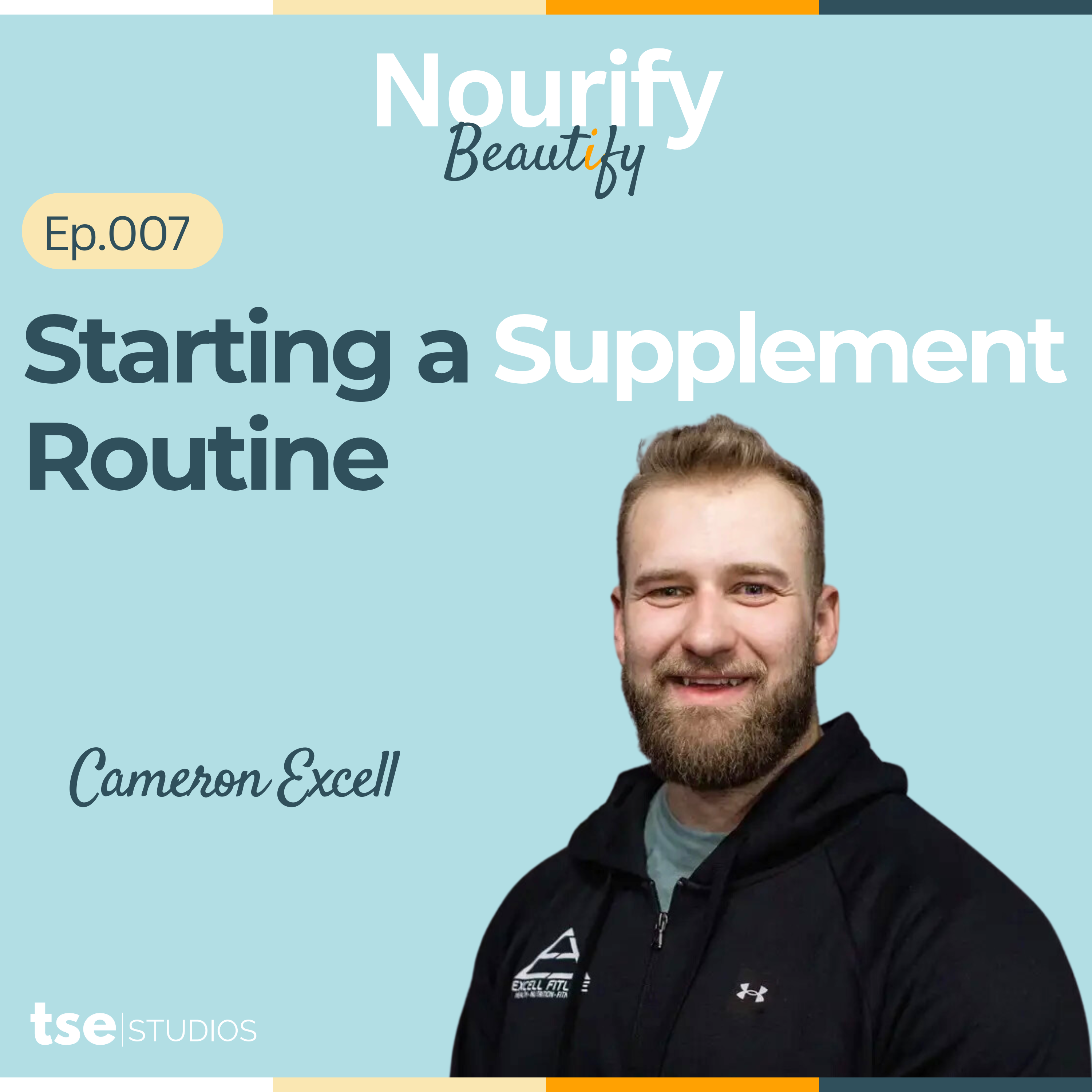
Health and fitness coach Cameron Excell joined Nour Abochama on Nourify & Beautify to cut through the noise. Cameron works with clients across fitness levels and has helped hundreds of people build supplement routines that actually support their health goals.
“The first thing I tell every client is: supplements supplement a good diet and lifestyle. They don’t replace it,” Cameron explains. “If your sleep, nutrition, and movement are a mess, no supplement is going to fix that.”
Step 1: Assess Your Diet and Lifestyle First
Before buying any supplement, Cameron recommends an honest assessment of your current diet and lifestyle:
Sleep: Are you getting 7-9 hours of quality sleep consistently? If not, this is your first priority. No supplement compensates for chronic sleep deprivation.
Nutrition: Are you eating a varied diet with plenty of vegetables, quality protein, and healthy fats? Supplements are most valuable when they fill specific gaps — not when they replace food.
Movement: Are you physically active? Regular exercise is one of the most powerful health interventions available. Supplements can support exercise performance and recovery, but they don’t replace movement.
Stress: Chronic stress undermines almost every health goal. Stress management should be addressed before or alongside supplementation.
Step 2: Start With the Foundational Supplements
Cameron recommends starting with supplements that address common nutritional gaps and have strong evidence bases:
Vitamin D3 + K2
Vitamin D deficiency is one of the most common nutritional deficiencies in the developed world — estimates suggest 40-70% of North Americans are deficient or insufficient. Vitamin D is essential for:
- Bone health (calcium absorption)
- Immune function
- Mood regulation
- Muscle function
Dose: 1,000-4,000 IU daily, depending on baseline levels (get tested to determine your needs). Always pair with K2 (100-200mcg MK-7) to direct calcium to bones rather than arteries.
Magnesium
Magnesium is involved in over 300 enzymatic reactions in the body. Deficiency is common due to soil depletion and dietary patterns. Benefits include:
- Sleep quality
- Muscle relaxation and recovery
- Stress and anxiety reduction
- Blood sugar regulation
Dose: 300-400mg daily. Magnesium glycinate is the most bioavailable and gentlest form. Avoid magnesium oxide (poor absorption).
Omega-3 Fatty Acids (EPA/DHA)
Unless you eat fatty fish 2-3 times per week, you’re likely not getting enough omega-3s. EPA and DHA support:
- Cardiovascular health
- Brain function and mood
- Inflammation reduction
- Joint health
Dose: 1-3g EPA+DHA daily. Choose fish oil or algae-based omega-3 (for vegans). Look for products with IFOS certification for purity.
Protein (if needed)
If you’re not meeting your protein needs through food (0.7-1g per pound of body weight for active individuals), a protein supplement can help. Whey protein is the most studied and has the best amino acid profile for muscle synthesis. Plant-based options (pea + rice blend) are effective alternatives.
Step 3: Add Goal-Specific Supplements
Once you have the foundations covered, consider supplements targeted to your specific goals:
For stress and sleep: Ashwagandha (KSM-66, 300-600mg/day), magnesium glycinate (if not already taking), L-theanine (200mg)
For athletic performance: Creatine monohydrate (3-5g/day — one of the most evidence-based supplements available), beta-alanine (3.2g/day for endurance), caffeine (3-6mg/kg body weight pre-workout)
For cognitive function: Lion’s mane mushroom (500-1000mg/day), bacopa monnieri (300mg/day), phosphatidylserine (100mg 3x/day)
For gut health: Probiotic (look for multi-strain products with 10-50 billion CFU), prebiotic fiber (psyllium husk, inulin)
For skin and hair: Collagen peptides (5-10g/day), biotin (2.5mg/day), silica
Men vs. Women: Key Differences
Cameron addresses common questions about whether men and women need different supplements:
Iron: Premenopausal women lose iron monthly through menstruation and are at higher risk of deficiency. Men rarely need iron supplementation (and excess iron can be harmful). Women should have iron levels tested before supplementing.
Folate: Women of childbearing age should take methylfolate (the active form of folic acid) — essential for neural tube development in early pregnancy.
Calcium: Both men and women need adequate calcium, but postmenopausal women have higher needs due to accelerated bone density loss.
Zinc: Men lose zinc through seminal fluid and may have higher needs. Zinc supports testosterone production and immune function.
Hormone-related supplements: Some supplements (like DIM, which supports estrogen metabolism) are more relevant for women; others (like ashwagandha for testosterone support) may be more relevant for men.
Common Mistakes to Avoid
1. Buying too many supplements at once. Start with 2-3 supplements and add one at a time. This allows you to identify what’s working and catch any adverse reactions.
2. Expecting immediate results. Most supplements require 4-12 weeks of consistent use before you’ll notice meaningful effects. Don’t abandon a supplement after two weeks.
3. Ignoring quality. The supplement industry is poorly regulated. Choose brands that use third-party testing (USP, NSF, Informed Sport) and can provide certificates of analysis.
4. Not consulting a doctor. Some supplements interact with medications or are contraindicated for certain conditions. Always consult your healthcare provider before starting a new supplement regimen.
5. Thinking more is better. Higher doses aren’t always more effective and can sometimes be harmful. Stick to evidence-based doses.
Key Takeaways
- Supplements work best when built on a foundation of good sleep, nutrition, and movement
- Start with foundational supplements: vitamin D3+K2, magnesium glycinate, omega-3s
- Add goal-specific supplements after the foundations are covered
- Introduce one supplement at a time to identify effects
- Give supplements 4-12 weeks before evaluating effectiveness
- Choose third-party tested products (USP, NSF, Informed Sport)
- Consult your healthcare provider, especially if you take medications
This article is based on Episode 7 of Nourify & Beautify with Cameron Excell. Listen on Podbean.